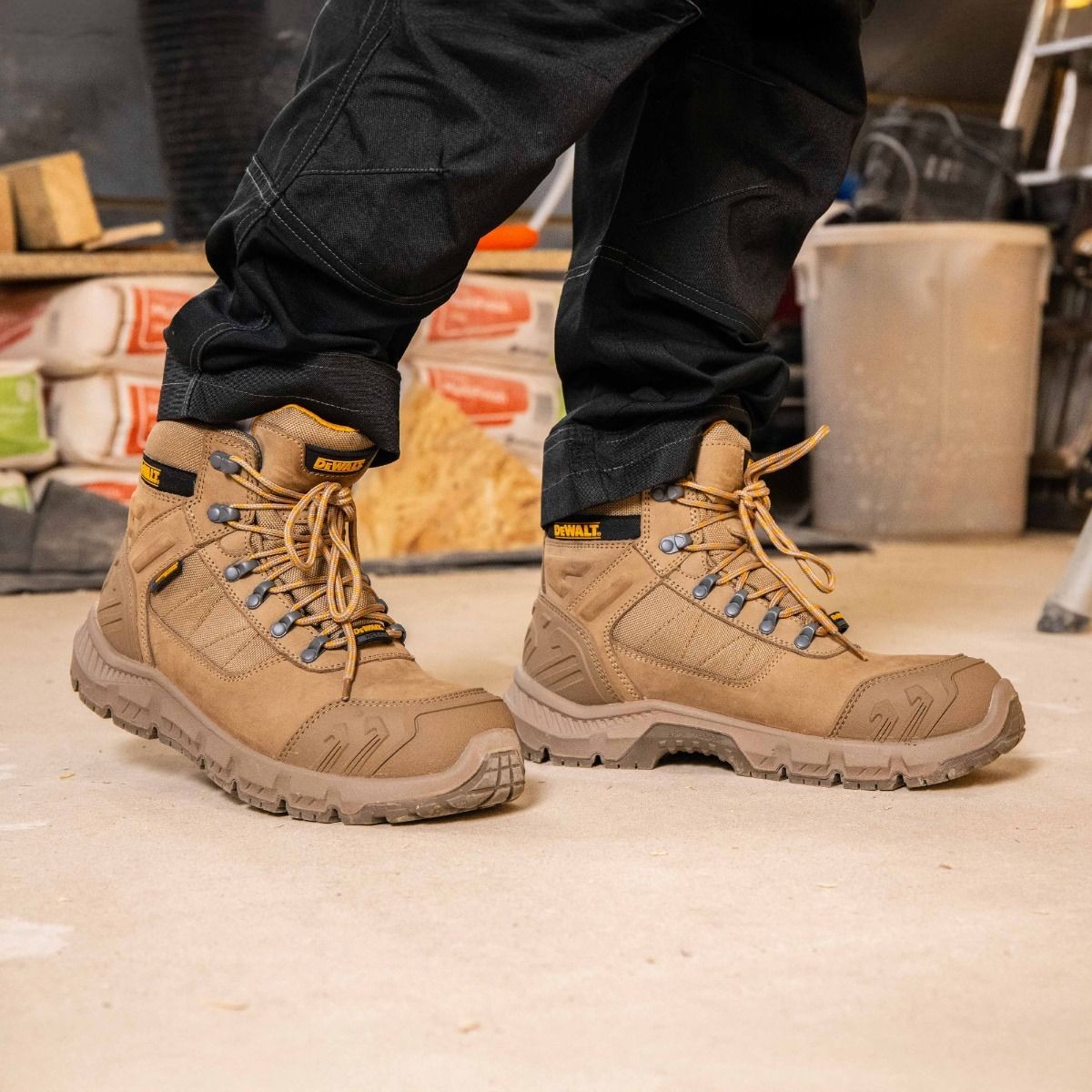
Safety Footwear Standards
Safety footwear standards give a quick indication of what protection each style of safety footwear provides. All safety boots, shoes and wellingtons supplied by Arden Winch conform to either CE EN 345 or EN ISO 20345 safety footwear standards and are marked with the following:
- SB: Impact and compression resistant toe cap.
- SBP: As SB, but also has a penetration resistant midsole.
- S1: As SB, but is also anti-static and has an energy absorbing heel.
- S1P: As S1, but also has a penetration resistant midsole.
- S2: As S1, but also has a water resistant upper.
- S3: As S2, but also has a penetration resistant midsole.
- S4: As S1, but has a waterproof polymer upper.
- S5: As S4, but also has a penetration resistant midsole.
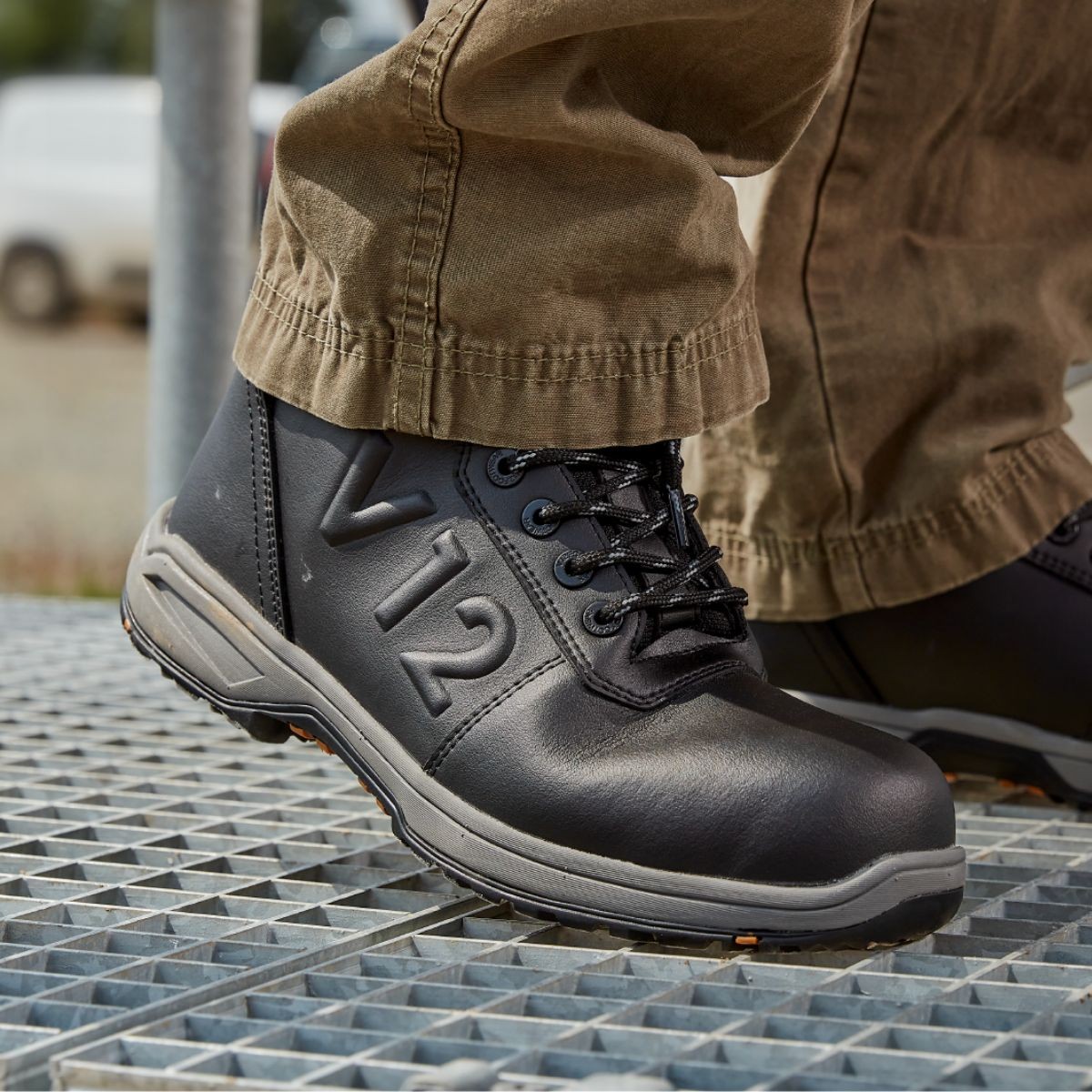
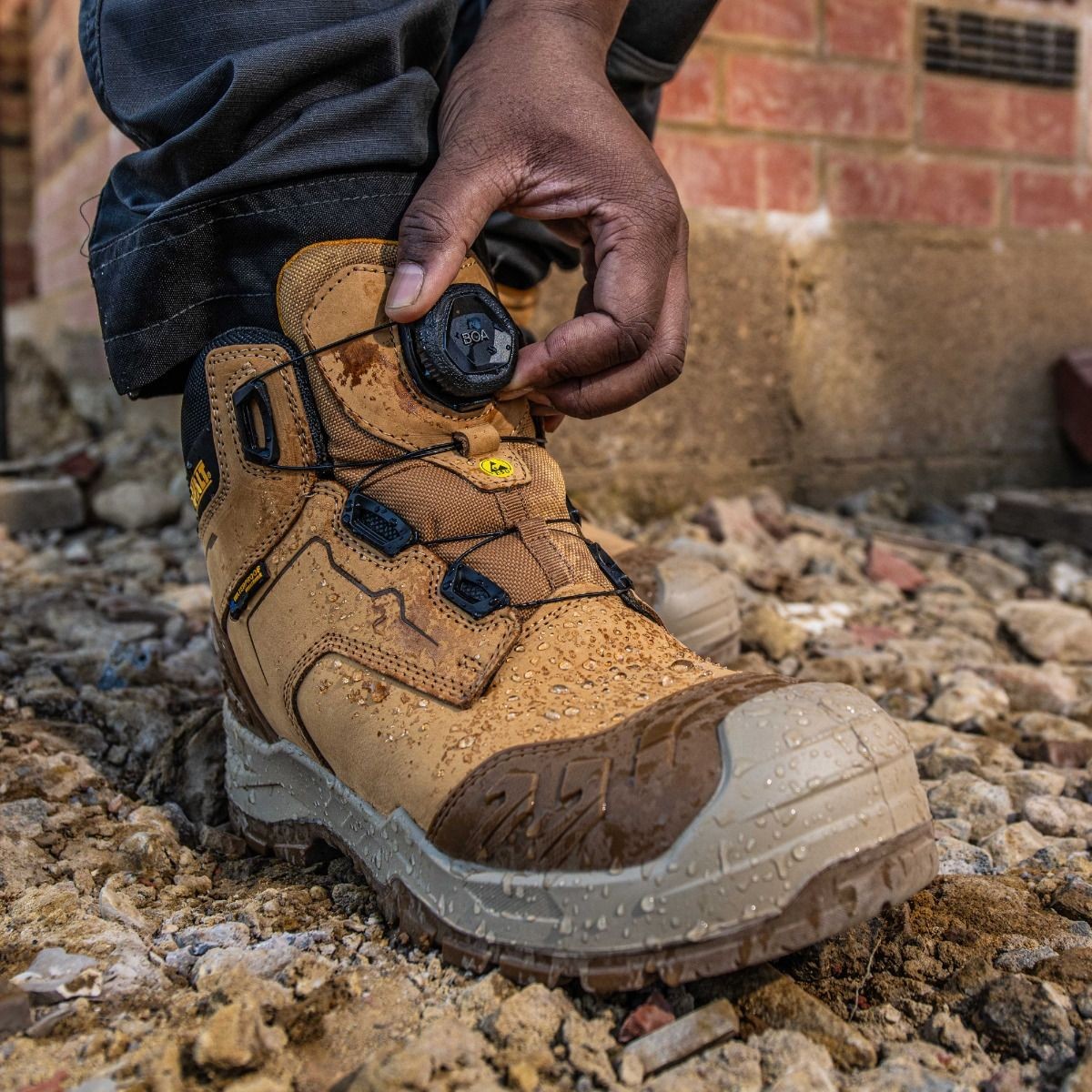
What the Ratings Mean
- Anti-static: Resists static electricity at a level between 100kOhm and 1,000MOhm resistance, and also gives protection from mains electrical current of up to 240V.
- Energy absorbing heel: 20 joule minimum.
- Midsole: 11,000 newton minimum force.
- Toe cap: 200 joule impact / 15,000 newton compression resistant.
Slip Resistance Standards
The relevant European standard for slip resistance is EN ISO 13287:2012, which specifies the method of testing for conventionally soled footwear (not those with spikes or metal studs).
There are two main tests for slip resistance: the ceramic tile test (SRA) and the steel floor test (SRB). In both instances, the footwear is placed on a lubricated surface and a normal force is applied. The resulting horizontal movement is measured to calculate the friction level. If the friction coefficient meets that specified by ISO 13287, the footwear has passed the test.
Footwear passing both the ceramic tile and steel floor tests is marked SRC.
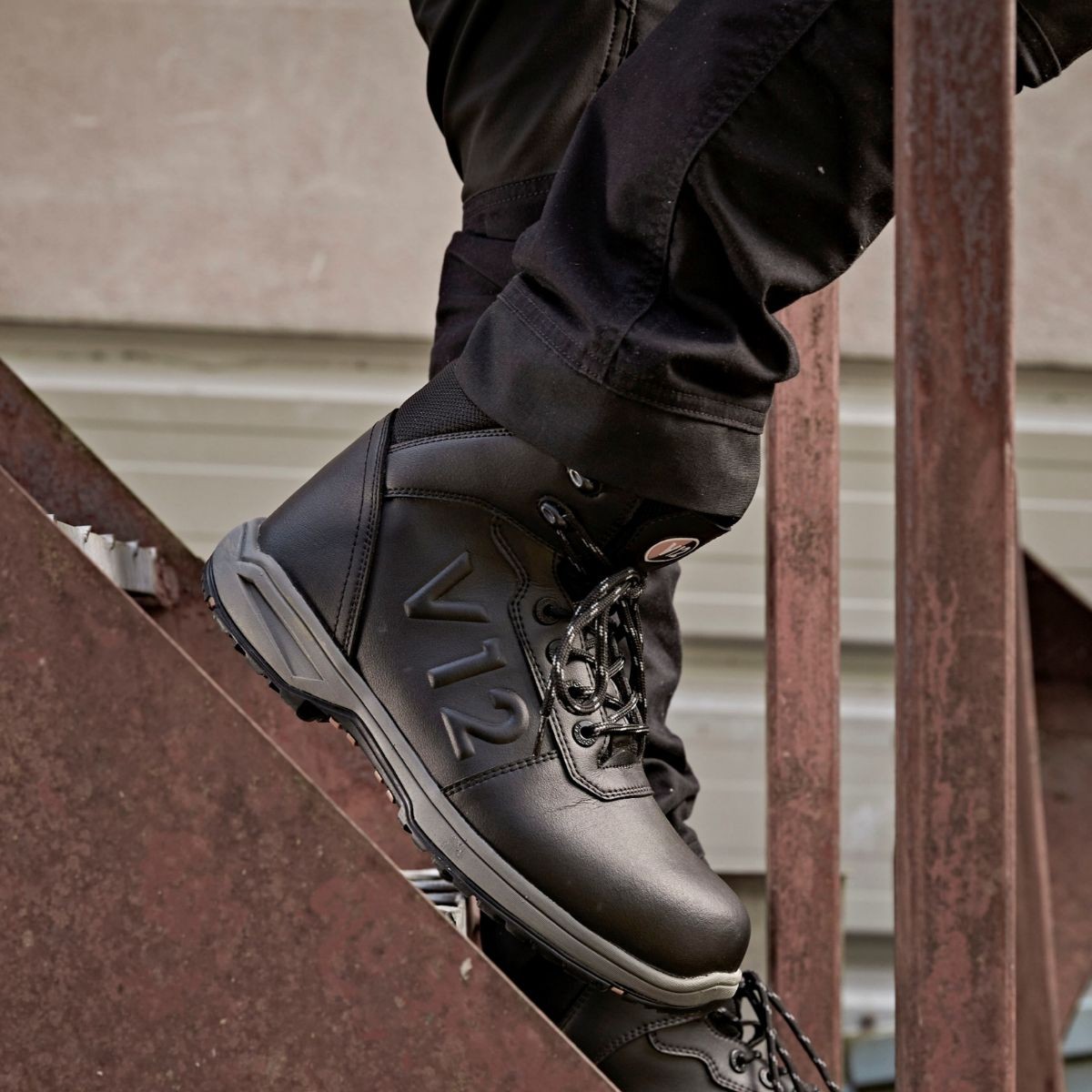
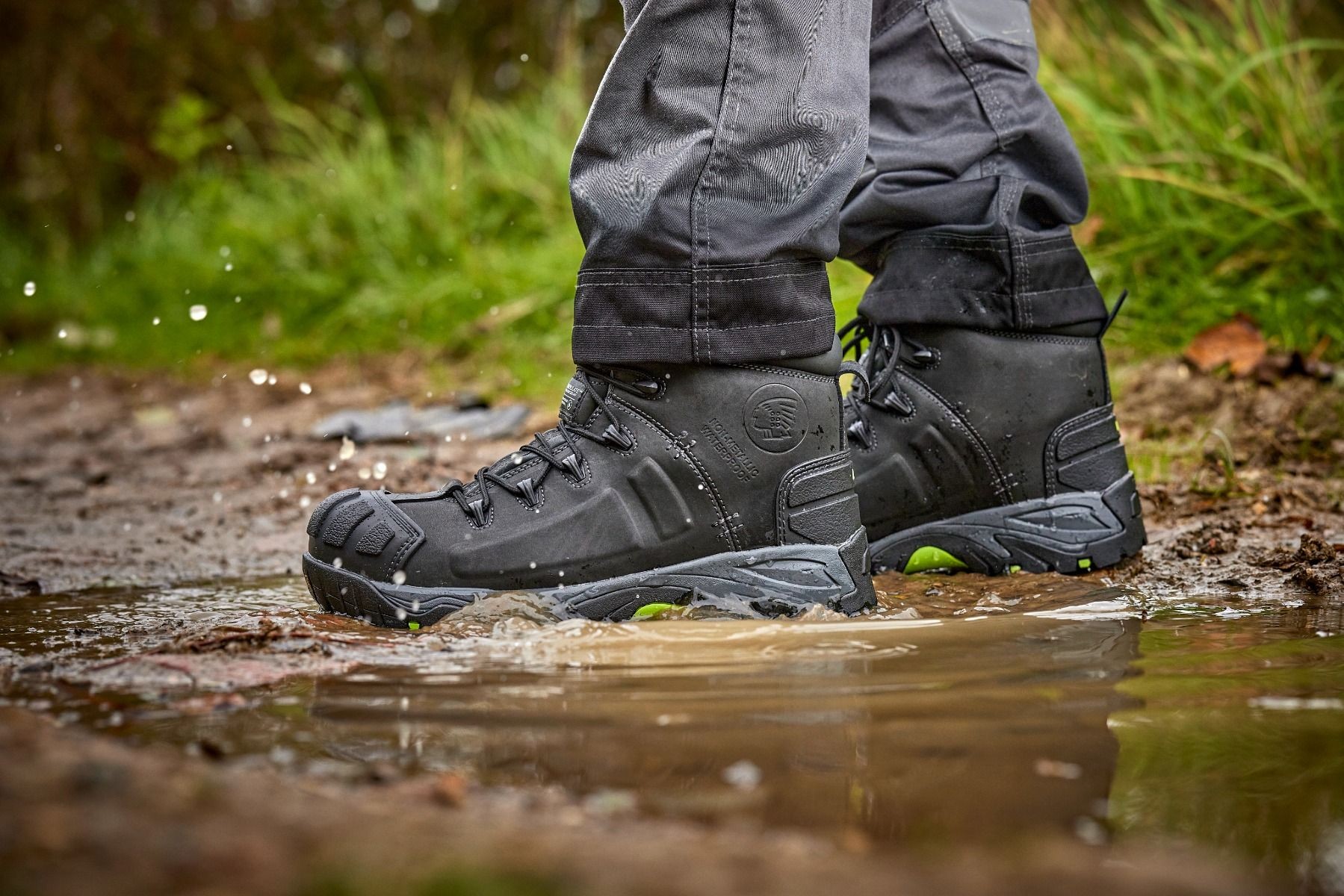
Is it Always Best to Buy Footwear with an SRC Slip Rating?
As pointed out by our supplier, V12 Footwear, in order to attain the SRC rating, soles will tend to have a lot of surface contact and many small cleats for dispersing water. In some outdoor environments, these cleats may become clogged with mud or gravel, adversely affecting slip resistance.
In such circumstances, a large cleated sole could provide better performance and be less prone to clogging. The reduced surface area, though, may have led to such a sole only achieving the SRA standard.
Footwear Trials
Ratings should only be taken as indicators, and the circumstances in each workplace are different. Where possible, proper footwear trials will always lead to the most appropriate solution.
As recommended by the HSE: do not select footwear on the basis of brochure descriptions or laboratory test results alone.